
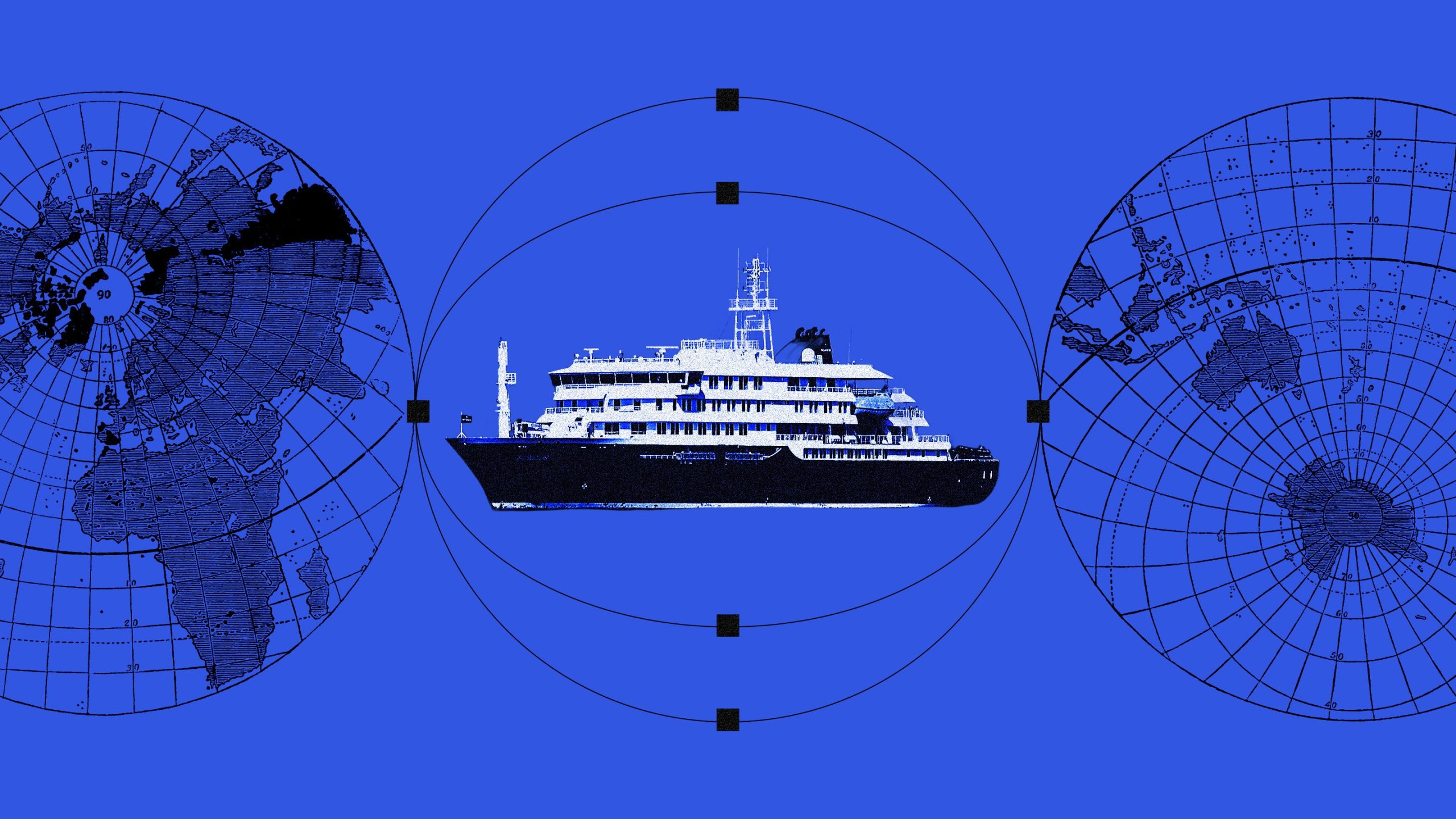
The MV Hondius, the cruise ship where an outbreak of hantavirus was confirmed over the weekend, is moving once again. On Wednesday, after three people were evacuated, the ship departed from Cabo Verde. By Sunday, it will arrive at the Canary Islands, where the Spanish government says it can dock. So far, though, three people have died in the outbreak, and the ship’s remaining passengers still need to be monitored for illness. Local leaders would rather the ship go somewhere else. And a chorus of TikToks that have each been viewed and liked millions of times call for a different approach: “Sink that ship.”
That’s probably (hopefully) a joke. But a perusal of the internet—both the memes and the upswell of concerned armchair epidemiologists—suggests that some people at least semi-sincerely fear that a pandemic is imminent. “I don’t want your rat poo virus. I have summer plans,” one woman posted on TikTok. (Hantavirus infects humans mostly through contact with excretions from infected rodents.) Yesterday, I saw that an old friend had posted on her Instagram story about a patient who had been medically evacuated to a town next to hers in Switzerland. “I just finished mentally recovering from Covid man,” she wrote next to a crying emoji. A new TikTok of a guy doing the Renegade—a dance inextricably linked to the early pandemic and the new influencers it minted—has been watched 20 million times and counting.
That people are concerned, or at least keeping an eye on hantavirus, makes sense. But all of the epidemiological evidence so far suggests that the general public has very little to worry about. “This is not going to be the next COVID,” Marion Koopmans, a virologist at Erasmus Medical Center, in the Netherlands, told me.
Hantavirus is a respiratory illness that starts out much like the flu: fever, aches, and chills. In severe cases, breathing becomes difficult, and the heart struggles to pump blood. Andes hantavirus—the species that the World Health Organization confirmed is causing the outbreak on the MV Hondius—has a fatality rate of about 40 percent.
Most types of hantavirus cannot spread among humans; everyone who gets sick must have been exposed to an infected rodent’s bodily fluids. But Andes hantavirus can, on occasion, be passed among people in extremely close contact. In one study of Andes hantavirus in Chile, sex partners of the infected had an 18 percent risk of catching the virus, but the risk to other members of the household was just 1 percent. In countries where Andes hantavirus is endemic, contact tracing classifies as high-risk people who are either sleeping next to or caring for the infected, Koopmans, whose work focuses in part on the transmission of zoonotic disease, said.
The cruise-ship outbreak is the first of its kind. But experts I spoke with told me that it’s no more alarming than the normal spread of the virus in countries where it’s endemic—it’s just a logistical nightmare because of the number of governments involved. “It’s very serious for the people exposed, and there’s some transmission to people that are very close contacts. But beyond that, there is very little risk,” Koopmans said. Alasdair Munro, an immunologist working to develop a hantavirus vaccine, told me in an email that the only way a pandemic could result from Andes hantavirus is “if the virus had somehow mutated,” becoming a fast-moving infection that, like measles or COVID, can spread more readily. “So far there is no indication of that,” he added.
Cruise ships are great breeding grounds for viral transmission. They assemble a group of people from around the world, keep them in close quarters with one another’s germs, and then release them back to their homes. But the contained setting of this outbreak has delivered at least one win for public-health officials: “We know precisely who was exposed and where all of those people are,” Munro said. That includes passengers who disembarked two weeks ago on the remote island of St. Helena. The WHO is holding regular meetings to coordinate contact tracing and medical evacuations of people aboard the ship who are showing symptoms.
The United States elected to leave the WHO earlier this year, and public-health experts are already critiquing what they’ve deemed to be a lackluster federal response. (The Department of Health and Human Services did not return a request for comment.) Still, health departments in five U.S. states—Arizona, California, Georgia, Texas, and Virginia—have identified people within their state’s borders who were on the cruise ship, and are monitoring them for symptoms. Signs of infection can take as long as eight weeks to appear, which can make for onerous contact tracing and quarantine protocols. But that long incubation period is still factored into containment strategies, Munro said.
During a press conference yesterday, a reporter asked how the WHO’s leaders could be so confident that Andes hantavirus won’t start a pandemic. COVID, the reporter noted, had also started small. Maria Van Kerkhove, the WHO’s acting director of epidemic and pandemic management, pointed out that whereas COVID had been novel, hantaviruses are not. The experts I spoke with emphasized that the only thing unusual about this outbreak is that it occurred on a luxury cruise ship. Unexpected things, of course, can and do happen in epidemiology. But all evidence suggests that hantavirus will remain an intimate tragedy.
The online response, meanwhile, has felt more like a soap opera. People on TikTok are posting daily updates on the “hantavirus drama,” thanking the Spanish passenger who “got the tea” on passengers who disembarked early and vowing that they’d choose social isolation over going back to Zoom parties. Nurses that worked through COVID are dissecting the news on Reddit. Marjorie Taylor Greene is posting about ivermectin. Hantavirus is almost certainly not the next COVID. But it has provided the world with an excuse to revisit and rehash a time when a virus actually did change all of our lives.